Which Country Is Best for Indian Students to Study MBBS Abroad?
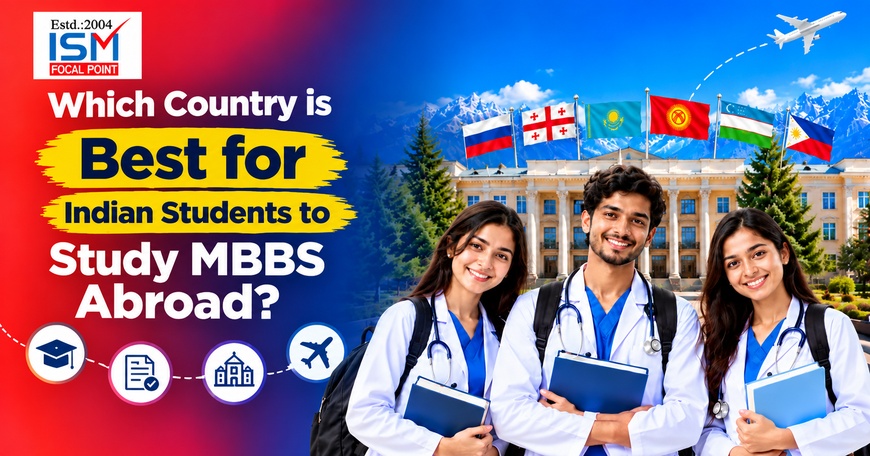
For students who have spent years preparing for a medical career, choosing where to study medicine is a decision that deserves careful thought. Limited medical seats, financial considerations and different admission opportunities encourage many Indian families to explore international universities. The question Best Country for Indian Students to Study MBBS Abroad cannot be answered through tuition fees alone. Students must also examine the teaching system, hospital training, university facilities and the conditions attached to practising medicine after graduation.
International medical education offers several pathways, but not every destination follows the same academic structure. Some universities provide direct-entry medical programmes, while others have additional preparatory requirements.
Best Country for Indian Students to Study MBBS Abroad Indian students commonly research Russia, Georgia, Kazakhstan, Kyrgyzstan, the Philippines and other destinations. Uzbekistan also appears in international admission discussions, although recent regulatory advisories make additional verification particularly important.
There is no official NMC ranking that identifies one foreign country as the best destination for Indian students. The suitability of an institution must be assessed individually.
Russia has a substantial history of welcoming international students into its higher education system. Medical universities in different cities offer undergraduate medical programmes, research facilities and opportunities to learn alongside students from various countries.
Best Country for Indian Students to Study MBBS Abroad For Indian applicants, the availability of different institutions makes university-level comparison especially important.
Academic aspects worth exploring:
Medical faculties with established teaching programmes.
Universities offering English-medium instruction in selected courses.
Laboratory facilities for anatomy, physiology and other medical subjects.
Opportunities to participate in practical medical training.
International student services and accommodation facilities.
The language used in classrooms may differ from the language used in hospitals. Students should ask how local-language training is incorporated into clinical education.
Weather is another practical consideration. Winters in several Russian cities are significantly colder than those in most parts of India.
Before accepting an offer, obtain information about the affiliated hospitals, clinical rotation schedules, total course duration and complete tuition structure.
Best Country for Indian Students to Study MBBS Abroad Russia can be an option for students who are prepared for an international academic environment and the practical adjustments involved in living there.
Georgia – An International University Environment
Georgia is frequently considered by students who prefer an international campus environment and medical programmes designed for overseas applicants.
Some universities offer medical education in English, which can make classroom learning more accessible to students arriving from India.
Features students may want to investigate:
Availability of English-taught medical programmes.
International student communities.
University laboratories and teaching facilities.
Academic support for overseas applicants.
Accommodation and student welfare arrangements.
Important points before applying:
Georgia has universities with different fee structures and academic arrangements. Students should not assume that every institution provides the same level of clinical exposure.
Best Country for Indian Students to Study MBBS Abroad Ask the university to explain its hospital partnerships, patient interaction opportunities and practical training arrangements. Learning basic Georgian can also be useful when communicating with patients.
Students should compare the complete programme cost, not just the initial admission payment.
Kazakhstan offers another group of institutions that international students may consider for medical education.
Best Country for Indian Students to Study MBBS Abroad The country has a mix of urban and regional university environments. This makes it important to understand where a particular institution is located and what facilities are available to its students.
Areas worth comparing:
Medical curriculum and academic calendar.
English-medium teaching arrangements.
Laboratory and practical learning facilities.
Hospital access during clinical training.
Hostel availability and accommodation costs.
International student support.
One question deserves particular attention: where do students complete their hospital rotations?
A university’s classroom facilities do not tell the entire story of its medical education programme. Students should request details about clinical departments, supervision and patient exposure.
Kazakhstan can be included in a student’s shortlist when its university offerings, costs and training arrangements match the family’s expectations.
Kyrgyzstan is regularly considered by Indian families looking for international medical education within a planned budget.
Some institutions advertise relatively accessible tuition fees, but the total financial commitment should be examined before accepting an offer.
What students can evaluate:
University-specific tuition charges.
Medical teaching facilities.
Availability of international student accommodation.
English-medium academic arrangements.
Clinical training opportunities.
Student assistance and campus facilities.
A point parents should not overlook
A lower admission fee does not necessarily translate into better educational value.
Best Country for Indian Students to Study MBBS Abroad Students should understand the university’s academic standards, the availability of teaching hospitals and how practical training is organised. Local-language communication can also become important when students begin interacting with patients.
For families considering Kyrgyzstan, a university visit or a detailed virtual discussion with its academic department can provide useful information.
The Philippines offers a different medical education pathway that may appeal to students who prefer studying in an English-speaking academic environment.
English is widely used in education and communication, making classroom interaction easier for many international students.
However, students need to understand the programme structure before applying.
English is widely used in educational settings.
International students can experience a multicultural environment.
Medical programmes include theoretical and practical components.
Students can explore different university and hospital settings.
Communication in English is common in many academic environments.
Some institutions have a pre-medical requirement before students progress to the professional medical programme. This can change the overall duration and cost of education.
Students must calculate the complete pathway from initial admission to the final medical qualification.
Best Country for Indian Students to Study MBBS Abroad They should also verify whether the programme satisfies all applicable Indian medical graduate requirements. A university’s admission eligibility for international students does not automatically establish eligibility for medical registration in India.
Uzbekistan has appeared in recent international medical admission campaigns, with students attracted by university options and advertised fee packages.
However, families must pay particular attention to regulatory developments.
On 1 April 2026, the National Medical Commission issued an alert concerning Indian students seeking admission to undergraduate medical programmes in Uzbekistan. The advisory highlighted the need to verify compliance with the Foreign Medical Graduate Licentiate Regulations, 2021.
This does not mean that every institution in the country should be treated identically. It means students should not proceed based on an admission agent’s assurances alone.
Before considering an institution, investigate:
The exact university and qualification being offered.
Whether the institution is authorised to provide the medical programme.
The full course duration.
The language of instruction.
The curriculum and clinical training arrangements.
Internship requirements.
Eligibility for medical registration in India.
The latest NMC advisory should be read directly before making an admission decision.
Official reference: https://www.nmc.org.in/
The following comparison is intended to help families organise their research. It is not a ranking of medical education quality.
Russia
Medical faculties and teaching hospitals
Climate and local language
Georgia
International academic programmes
Fees and clinical exposure
Kazakhstan
University facilities and curriculum
Hospital training arrangements
Kyrgyzstan
Tuition and accommodation options
Institutional quality
Philippines
English-friendly education
Pre-medical pathway
Uzbekistan
University and programme eligibility
Latest NMC advisories
The answer to Best Country for Indian Students to Study MBBS Abroad becomes more meaningful when students compare specific institutions instead of relying on general country rankings.
For Indian students, the most important part of foreign medical education planning is understanding the requirements for obtaining medical registration in India.
The NMC introduced the Foreign Medical Graduate Licentiate (FMGL) Regulations, 2021, to establish the applicable standards for foreign medical graduates.
Students whose medical education commenced after these regulations came into force must carefully examine the requirements applicable to their programme.
Important areas include:
NEET-UG Qualification
Indian students intending to obtain a foreign primary medical qualification and subsequently practise in India must meet the applicable NEET-UG qualification requirements.
Students should verify their eligibility and examination status before beginning the admission process.
Course Duration
The foreign medical programme must satisfy the prescribed academic duration. Under the applicable FMGL framework, the course includes a minimum of 54 months of medical education.
Students should confirm the complete academic schedule in writing.
Medium of Instruction
The applicable regulations prescribe English as the medium of instruction. Students must verify the actual teaching language rather than relying only on the wording of an admission brochure.
Clinical Training
Medical education must include the required clinical subjects and practical training.
Students should understand which hospitals are involved, how rotations are arranged and whether the complete training structure meets the applicable regulations.
Internship Requirements
Internship arrangements require particular attention. Under the applicable framework, the prescribed internship at the foreign institution and the supervised internship requirements in India must be examined carefully.
Students should not assume that an internship completed in any hospital or country will automatically be accepted.
Licensing and Registration
Foreign medical graduates must qualify the applicable licensing or screening examination and fulfil the remaining registration requirements.
The Foreign Medical Graduate Examination (FMGE) has historically been the screening examination for eligible foreign medical graduates. Students should check current NMC and NBEMS notifications for the examination pathway applicable to their graduating batch.
The NMC also clarifies that it does not endorse a general list of foreign medical universities. Therefore, students should obtain university and course information directly from the institution and verify the applicable regulatory requirements.
The financial commitment involves more than paying the university’s first-year tuition fee.
A family should prepare a complete budget covering the entire duration of the programme. This makes it easier to compare two universities that may advertise very different admission packages.
Consider these expense categories:
Ask for a year-wise fee schedule, including examination charges and compulsory academic expenses. Find out whether tuition can increase during the programme.
Check whether hostel accommodation is available throughout the academic year. Ask about room sharing, utilities, heating facilities and security arrangements.
Calculate regular spending on meals, clothing, transport and everyday necessities. Students may need additional funds during winter or examination periods.
Include international flights, airport transfers and local transportation. Families should also account for emergency travel.
Check visa application expenses, residence permit renewals and compulsory medical insurance.
Medical students may need textbooks, laboratory materials, equipment and other learning resources.
Understand the financial requirements associated with clinical training, examinations and applicable internship arrangements.
Request a written estimate from the university and avoid making financial decisions based on a package that only covers the first academic year.
Indian students planning to pursue medical education abroad should understand the NEET qualification requirements before applying. Students can refer to the official NEET UG eligibility and examination guidelines published by the National Testing Agency (NTA) for examination-related information, eligibility details and official notifications.
The suitable destination depends on the university and the student's requirements. Russia, Georgia, Kazakhstan, Kyrgyzstan and the Philippines are among the countries Indian students investigate. University quality, clinical training, total expenditure and NMC compliance should determine the final choice.
Indian students intending to obtain a foreign medical qualification and practise in India must satisfy the applicable NEET-UG qualification requirements. They should check the latest eligibility rules before applying.
Students commonly compare institutions in Russia, Kazakhstan and Kyrgyzstan, among other destinations. However, tuition fees alone should not determine the decision. Families should evaluate the complete programme cost and educational arrangements.
Yes, provided they satisfy the applicable NMC requirements, complete the prescribed training and internship components, qualify the relevant licensing or screening examination and obtain the necessary registration.
English-medium instruction is an important requirement under the applicable FMGL framework, but it is not the only condition. Course duration, curriculum, clinical training, internship and other regulatory requirements must also be fulfilled.

Your Trusted Partner for Medical Education Abroad. ISM Focal Point (P) Ltd. has been guiding Indian students toward quality medical education abroad since 2005.
Copyright © 2026 ISM Focal point | Designed by Web Rocz